
How to Diagnose Underperforming Google Ads Campaigns
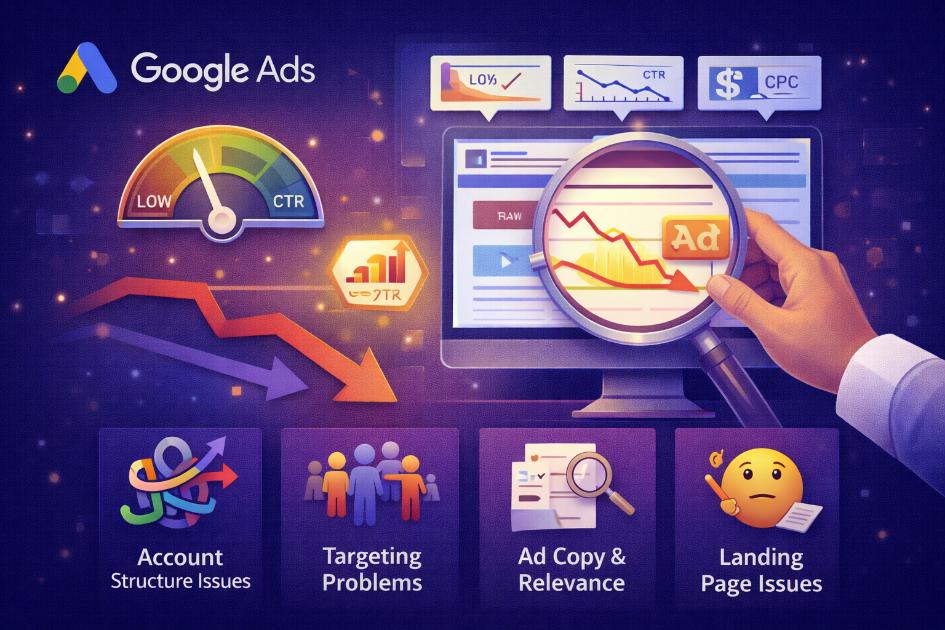
Many businesses invest heavily in Google Ads but fail to see the expected results. Leads may slow down, costs rise unexpectedly, or conversions stop altogether. In most cases, the issue is not the advertising platform itself, but hidden problems within campaign setup, targeting, or optimization. Without proper diagnosis, advertisers often increase budgets or pause campaigns without addressing the root cause. Leveraging a professional Google Ads management service ensures campaigns are structured efficiently, monitored closely, and optimized for maximum performance.
Diagnosing underperforming Google Ads campaigns requires a systematic approach. By analyzing data, identifying weak points, and understanding how different elements interact, businesses can uncover why campaigns fail and how to fix them. A structured diagnosis not only restores performance but also prevents long-term budget waste.
What Does an Underperforming Google Ads Campaign Look Like?
An underperforming campaign does not always mean zero conversions. Often, performance issues appear gradually and go unnoticed until results decline significantly.
Common signs include rising cost-per-click, low conversion rates, poor Quality Scores, and irrelevant traffic. In some cases, impressions remain high, but clicks drop, indicating weak ad relevance. In others, clicks increase, but conversions decline, pointing to landing page or intent mismatches.
Recognizing these early warning signs is the first step toward fixing performance issues.
Start With Clear Performance Benchmarks
Before diagnosing problems, it is important to understand what “underperforming” actually means for your business. Without benchmarks, performance analysis becomes subjective.
Benchmarks should include historical data such as average cost-per-conversion, conversion rate, click-through rate, and return on ad spend. Comparing current performance against past results or industry standards provides clarity on where the decline started and how severe it is.
Clear benchmarks help isolate whether the issue is recent, gradual, or structural.
Analyze Campaign-Level Performance First
Campaign-level analysis provides a high-level overview of where performance drops occur. Some campaigns may perform well while others drain the budget without results.
Key metrics to review include impressions, clicks, CTR, CPC, conversions, and cost-per-conversion. A sudden increase in spend without proportional results often signals bidding or targeting issues. Low impressions may indicate budget limitations or lost impression share.
Identifying weak campaigns early prevents wasted time analyzing ad groups that are not contributing meaningfully.
Diagnose Keyword and Search Intent Mismatches
Keywords are a common cause of poor Google Ads performance. Underperforming campaigns often target keywords that do not align with user intent.
Deep impressions with low clicks usually indicate that keywords are too broad or not relevant. High clicks with low conversions often mean keywords attract the wrong audience. Reviewing search term reports reveals whether ads appear for irrelevant queries. Implementing Google Services ads can help align keyword strategy with actual search intent and audience targeting.
Fixing keyword intent issues improves traffic quality and protects budget efficiency.
Review Ad Relevance and Messaging
Ad copy plays a critical role in campaign performance. Even well-targeted keywords fail if ads do not resonate with search intent.
Low click-through rates often indicate weak messaging or a lack of relevance. Ads should clearly address the user’s problem, highlight value, and match keyword intent. Generic ads trying to appeal to multiple audiences usually perform poorly.
Refreshing ad copy and aligning it closely with ad group themes often leads to immediate CTR improvements.
Evaluate Quality Score Components
Quality Score directly impacts ad visibility and cost-per-click. Underperforming campaigns often suffer from low Quality Scores without advertisers realizing it.
Expected CTR, ad relevance, and landing page experience influence Quality Score. Poor scores increase costs and reduce impression share. Reviewing Quality Score at the keyword level helps identify which component is causing the issue.
Improving relevance and user experience can significantly reduce costs while improving performance.
Check Conversion Tracking Accuracy
Faulty conversion tracking can make successful campaigns appear underperforming or vice versa. Without accurate data, optimization decisions become unreliable.
Conversion actions should reflect meaningful business outcomes, not vanity metrics. Tracking errors, duplicate conversions, or missing tags distort performance analysis. Verifying conversion setup ensures Google Ads optimization is based on accurate signals.
Accurate data is essential for diagnosing real performance problems.
Analyze Landing Page Experience
Landing pages are often overlooked when diagnosing Google Ads issues. High bounce rates and low conversion rates frequently originate from poor landing page experience.
Pages that load slowly, lack clarity, or fail to match ad messaging frustrate users. Even strong ads cannot compensate for weak landing pages. Reviewing page speed, messaging alignment, and mobile usability is critical.
Improving landing pages often unlocks better performance without changing ads or keywords.
Identify Budget and Bidding Limitations
Budget and bidding strategies can restrict performance if not aligned with campaign goals. Underperforming campaigns may be limited by low budgets or overly aggressive bid caps.
Lost impression share due to budget indicates missed opportunities, while inefficient bidding can increase costs without improving results. Reviewing bidding strategies ensures campaigns have enough flexibility to compete effectively.
Proper budget allocation supports sustainable performance improvement.
Review Audience Targeting and Segmentation
Audience targeting errors can quietly harm performance. Campaigns may target users who are not ready to convert or exclude valuable segments unintentionally.
Reviewing demographic data, location targeting, and audience exclusions helps identify mismatches. Remarketing lists and in-market audiences should align with campaign goals.
Refining audience targeting improves lead quality and conversion rates.
Look for Structural and Organizational Issues
Account structure impacts how efficiently Google Ads campaigns perform. Poor structure often leads to overlapping keywords, diluted data, and limited optimization control.
Underperforming campaigns frequently use overcrowded ad groups or mixed objectives within a single campaign. Structural issues make it harder for Google’s algorithm to optimize effectively.
A clean, logical structure improves clarity and long-term performance.
Monitor Trends Instead of One-Day Data
Short-term fluctuations are normal in Google Ads. Diagnosing performance based on single-day data often leads to incorrect conclusions.
Analyzing trends over time reveals whether issues are temporary or structural. Sudden drops may relate to market changes, competition, or tracking errors. Gradual declines often point to relevance or fatigue issues.
Trend analysis provides more accurate insights for diagnosis.
Common Reasons Google Ads Campaigns Underperform
Most underperforming campaigns share similar problems. These include poor keyword intent, weak ad relevance, slow landing pages, inaccurate tracking, and a lack of ongoing optimization.
Other common issues include ignoring negative keywords, relying too heavily on automation without oversight, and failing to adapt to changing search behavior.
Identifying these patterns helps prevent repeated mistakes.
How Diagnosing Issues Leads to Better Optimization
Diagnosing performance issues is not about blame but about improvement. A clear diagnosis creates a roadmap for optimization and growth.
Once problems are identified, advertisers can refine targeting, improve messaging, optimize landing pages, and adjust bidding strategies. This systematic approach leads to stronger ROI and long-term stability.
Diagnosis turns struggling campaigns into scalable growth opportunities.
Conclusion
Diagnosing underperforming Google Ads campaigns requires a structured, data-driven approach. By analyzing keywords, ads, landing pages, tracking, and structure, businesses can uncover hidden issues that quietly drain budgets.
Rather than increasing spend or pausing campaigns unquestioningly, proper diagnosis allows advertisers to fix inefficiencies and restore performance. Leveraging a professional Google Ad management service ensures campaigns are optimized and aligned with business goals, while experienced teams can provide guidance and actionable insights for sustainable growth.
FAQS
Why do Google Ads campaigns underperform?
Google Ads campaigns underperform due to poor keyword intent, weak ad relevance, inaccurate conversion tracking, slow landing pages, or inefficient bidding and targeting.
How can I tell if my Google Ads campaign is failing?
A campaign may be failing if it shows rising costs, low conversion rates, declining click-through rates, or poor Quality Scores compared to historical benchmarks.
What is the first step in diagnosing Google Ads issues?
The first step is reviewing campaign-level performance metrics such as impressions, clicks, conversions, and cost-per-conversion to identify where the decline starts.
Can landing pages cause Google Ads to underperform?
Yes, a poor landing page experience can significantly reduce conversion rates, increase bounce rates, and negatively impact Quality Score and overall campaign performance.
How often should Google Ads campaigns be diagnosed?
Google Ads campaigns should be reviewed weekly for performance trends and diagnosed in-depth monthly or whenever results decline unexpectedly.


