
Google Ads That Get High Click-Through Rates (CTR)
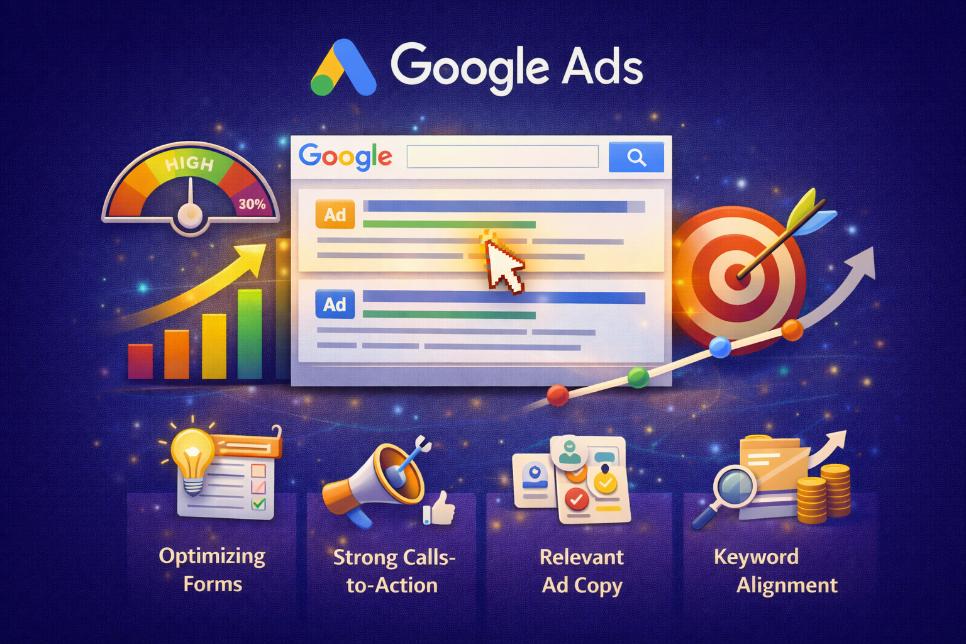
A high click-through rate (CTR) is one of the most important indicators of a successful Google Ads campaign. It shows that your ads are relevant, engaging, and aligned with what users are actively searching for. Google rewards ads with higher CTRs by improving Quality Score, lowering cost-per-click, and increasing visibility in search results. In competitive markets, CTR often determines whether your ads dominate results or get buried beneath competitors. Implementing professional Google Ads optimization services ensures your campaigns are consistently refined, strategically structured, and capable of achieving higher engagement from the start.
Many advertisers struggle with low CTR, not because their services are weak, but because their ads fail to communicate value clearly. Generic messaging, poor intent matching, and unclear calls-to-action all contribute to underperforming ads. Writing high-CTR Google Ads requires a strategic approach that combines keyword relevance, persuasive messaging, and continuous optimization.
Why Click-Through Rate Matters in Google Ads
Click-through rate directly influences how Google evaluates the relevance of your ads. When users consistently click on your ads, Google interprets this as a signal that your ad closely matches search intent. As a result, Google assigns a higher Quality Score, which can significantly reduce advertising costs while improving ad placement.
Low CTR, on the other hand, signals poor relevance. Even with a high budget, ads with weak CTR struggle to appear in top positions and often cost more per click. Improving CTR is not just about attracting clicks—it is about improving the overall efficiency and profitability of your Google Ads campaigns.
Understanding Search Intent Before Writing Ads
Successful Google Ads start with a deep understanding of search intent. Every keyword reflects a specific goal, whether the user is looking for information, comparing options, or ready to make a purchase. Ads that fail to reflect this intent often feel irrelevant and are ignored.
When your ad copy directly answers what the user is looking for, it creates an instant connection. Matching intent ensures your ad feels personalized, useful, and timely, which naturally increases CTR. Without intent alignment, even well-written ads struggle to perform. Integrating Google Ads seo services in your strategy helps align ad messaging with search behavior, ensuring higher relevance and engagement.
Using Keywords Naturally in Ad Copy
Keyword relevance is a major factor in writing high-performing Google Ads. Including the primary keyword in your headlines reassures users that your ad directly addresses their search. This familiarity increases trust and encourages clicks.
However, keywords should always be used naturally. Forced or repetitive keyword usage makes ads sound robotic and can reduce engagement. The goal is to reflect the user’s language clearly and conversationally while maintaining readability and professionalism.
Writing Headlines That Attract Attention
Headlines are the most critical part of any Google Ad. They are the first thing users see and often determine whether the ad gets clicked or ignored. Strong headlines immediately communicate value and relevance.
Effective headlines focus on solving a problem, highlighting a benefit, or presenting a compelling reason to click. When users instantly understand what they gain from clicking your ad, CTR increases significantly. Clear, specific, and benefit-driven headlines consistently outperform vague or generic ones.
Emphasizing Benefits Instead of Features
Many advertisers make the mistake of focusing on what they offer instead of why it matters. Users are not interested in service descriptions—they want outcomes. Ads that highlight benefits such as saving time, reducing costs, or achieving better results resonate far more strongly.
By shifting the focus from features to results, your ads speak directly to user needs. This approach makes ads feel more valuable and persuasive, leading to higher engagement and better CTR.
Using Emotional Triggers to Increase Clicks
Emotion plays a powerful role in decision-making. Ads that tap into trust, urgency, convenience, or reassurance tend to attract more clicks. When users feel understood or motivated emotionally, they are more likely to engage.
Effective Google Ads use emotional triggers ethically by addressing pain points and offering clear solutions. When done correctly, emotional appeal strengthens relevance and improves CTR without sacrificing credibility.
Writing Clear and Action-Oriented Calls-to-Action
A strong call-to-action guides users toward the next step. Without a clear CTA, even relevant ads may fail to convert interest into clicks. Effective CTAs create clarity and urgency while aligning with user intent.
Whether users are ready to call, request a quote, or book a consultation, the CTA should make the action obvious. Ads with clear direction consistently outperform those that leave users guessing.
Improving CTR with Ad Extensions
Ad extensions enhance the visibility and credibility of Google Ads by providing additional information. They make ads larger and more informative, which naturally increases click-through rates.
Extensions such as sitelinks, callouts, and call extensions give users more reasons to engage while improving the overall appearance of the ad. Google often prioritizes ads with extensions, making them an essential part of CTR optimization.
Aligning Ads with Landing Pages
High CTR alone is not enough if the landing page fails to meet user expectations. When users click an ad, they expect the landing page to deliver exactly what the ad promises. Any mismatch leads to frustration, higher bounce rates, and wasted ad spend.
Message alignment between ads and landing pages builds trust and improves both CTR and conversion rates. When users feel confident they are in the right place, they are more likely to take action.
Continuously Testing and Optimizing Ad Copy
Even the best Google Ads can improve with testing. Regular A/B testing allows advertisers to identify which headlines, messages, and CTAs perform best. Over time, small improvements in CTR can lead to major gains in overall performance.
Testing should be an ongoing process, not a one-time effort. Google Ads is dynamic, and user behavior changes constantly. Continuous optimization ensures ads remain competitive and effective.
Avoiding Common Ad Copy Mistakes
Low CTR is often the result of common mistakes such as generic messaging, poor intent targeting, or outdated ad copy. Ads that fail to evolve quickly lose relevance and performance.
Avoiding these mistakes requires attention to detail, frequent updates, and a focus on relevance. Ads that stay aligned with user needs consistently outperform static or poorly targeted campaigns.
Conclusion
Writing Google Ads that achieve high click-through rates requires strategy, relevance, and precision. By understanding search intent, using keywords naturally, emphasizing benefits, and maintaining alignment with landing pages, advertisers can significantly improve CTR and campaign efficiency.
High CTR leads to better Quality Scores, lower costs, and stronger visibility. When ads are written with the user in mind and optimized continuously, Google Ads becomes a powerful and sustainable growth channel rather than an expensive experiment. Leveraging Google Services ads ensures campaigns are professionally managed, strategically aligned, and capable of delivering measurable results for your business.
FAQS
What is a good click-through rate for Google Ads?
A good click-through rate for Google Ads typically ranges between 3% and 6% for search campaigns, although this can vary by industry. Highly competitive industries may see lower averages, while well-optimized service-based campaigns can exceed this range. Improving relevance and ad copy quality plays a major role in achieving a strong CTR.
How does click-through rate affect Google Ads performance?
Click-through rate directly impacts Quality Score, which influences ad rankings and cost-per-click. Higher CTR signals relevance to Google, allowing ads to appear more frequently while costing less per click. Poor CTR can lead to higher costs and reduced visibility, even with a strong budget.
Do keywords in ad headlines really improve CTR?
Yes, including keywords in ad headlines significantly improves CTR because it reassures users that the ad matches their search intent. When users see their exact or closely related search terms in the ad, they are more likely to click, increasing relevance and engagement.
Why do Google Ads with good CTR still fail to convert?
High CTR does not guarantee conversions if landing pages are poorly optimized or misaligned with ad messaging. If users click but do not find what they expect, bounce rates increase and conversions drop. Strong alignment between ad copy and landing page content is essential for turning clicks into leads or sales.
How often should Google Ads copy be updated?
Google Ads copy should be reviewed and optimized at least once a month. Frequent testing allows advertisers to adapt to changing search behavior, seasonal demand, and competitor activity. Regular updates help maintain high CTR and long-term campaign performance.


