
Social Media Management vs Social Media Marketing: Key Differences
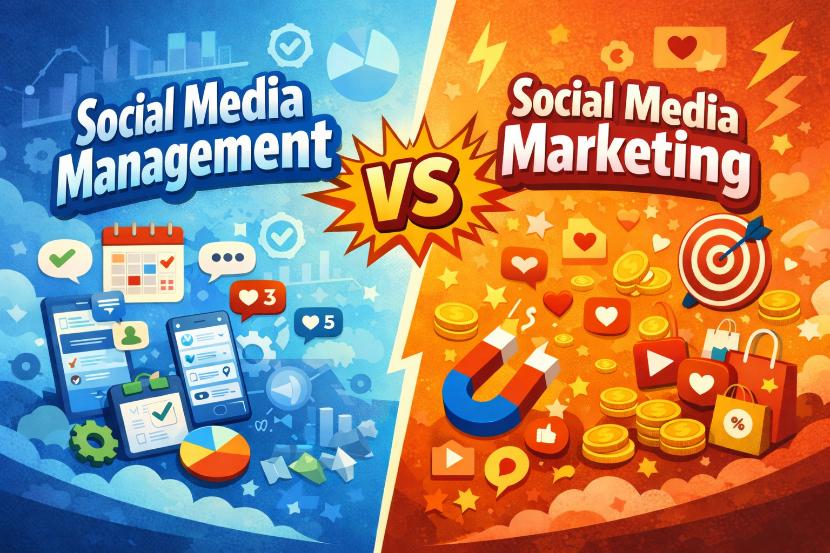
What Is Social Media Management?
Social media management refers to the day-to-day activities involved in running a business’s social media accounts. It includes creating and scheduling posts, engaging with followers, monitoring mentions, and analyzing performance. The goal is to maintain an active, relevant, and consistent social presence that aligns with the brand’s identity.
Social media managers often focus on:
- Creating and curating content that resonates with your audience
- Scheduling posts consistently to maintain visibility.
- Responding promptly to comments, messages, and reviews
- Tracking engagement metrics such as likes, shares, and followers
A strong social media management strategy ensures that audiences recognize your brand, engage with your content, and feel connected to your business. It also lays the groundwork for successful marketing campaigns by establishing credibility and trust.
What Is Social Media Marketing?
Social media marketing refers to strategic initiatives aimed at achieving specific business goals. It includes planning campaigns, running paid ads, leveraging influencer collaborations, and promoting products or services to a targeted audience.
Social media marketers focus on:
- Developing campaigns to drive leads, sales, or website traffic
- Targeting audiences based on demographics, interests, and behavior
- Monitoring performance metrics like conversions, click-through rates, and ROI
- Optimizing campaigns for better results through testing ad creatives and bidding strategies
While social media management maintains your brand presence, social media marketing actively drives business outcomes. It’s goal-oriented, time-bound, and directly tied to measurable KPIs.
Key Differences Between Social Media Management and Social Media Marketing
The differences between these two concepts can be summarized as:
| Feature | Social Media Management | Social Media Marketing |
| Goal | Build brand presence and engagement | Achieve business objectives such as leads or sales |
| Focus | Content creation, posting, community management | Campaign strategy, paid ads, and conversions |
| Metrics | Likes, comments, shares, followers | Click-through rates, conversions, ROI, cost-per-lead |
| Approach | Ongoing and consistent | Goal-oriented and time-bound |
| Tools | Scheduling tools, analytics dashboards | Advertising platforms, audience targeting tools |
| Scope | Day-to-day account management | Campaign planning, execution, and optimization |
How Social Media Management Supports Marketing
Key ways management supports marketing include:
- Building brand trust through consistent engagement
- Providing a content library for campaigns and ads
- Ensuring all pages reflect the correct branding and messaging
Businesses that neglect management may face low engagement, poor content performance, and decreased ad efficiency. By combining management with marketing, brands can create a synergistic approach that drives both visibility and conversions.
Tips for Balancing Management and Marketing
- Define clear objectives: Identify what you want to achieve with both management and marketing efforts.
- Align content with campaigns: Ensure organic posts support paid campaign messaging.
- Monitor analytics: Track both engagement and conversion metrics to make informed adjustments.
- Invest in tools: Use management and marketing tools to streamline workflows and optimize results.
- Test and refine: Continuously optimize both organic content and paid campaigns to improve performance.
It’s also crucial to consider your audience. Understanding where your audience spends time and what content resonates with them will help prioritize management and marketing tasks.
Real-World Examples
- Example 1: A small e-commerce brand maintains an active Instagram profile (management) and runs targeted ads for seasonal promotions (marketing). The combination leads to higher conversions and repeat sales.
- Example 2: A B2B SaaS company posts educational content regularly (management) while running LinkedIn lead generation campaigns (marketing). It builds trust and drives qualified leads simultaneously.
These examples highlight that management keeps your audience engaged, while marketing turns engagement into measurable business results.
Conclusion
FAQS
Can social media management and marketing be handled by the same team?
Yes, depending on the size of your business. Small businesses may have a single team handling both, while larger companies often separate roles to ensure focus and expertise.
How does social media management improve marketing results?
Active engagement, consistent posting, and a well-maintained profile increase trust and authority, making marketing campaigns more effective and improving ROI.
Which should a business prioritize first, management or marketing?
New businesses should focus on management first to establish a strong presence. Once consistent engagement is achieved, marketing campaigns can be implemented for growth and conversions.
What metrics differentiate social media management from marketing?
Management metrics include engagement rates, follower growth, and shares. Marketing metrics focus on conversions, leads, click-through rates, and return on ad spend (ROAS).
Are paid campaigns necessary if social media management is strong?
While organic management builds audience trust, paid campaigns are often essential to reach new audiences, achieve specific business goals, and scale results efficiently.


