OpenAI Ends Sora Project, Disrupting Potential Disney AI Deal
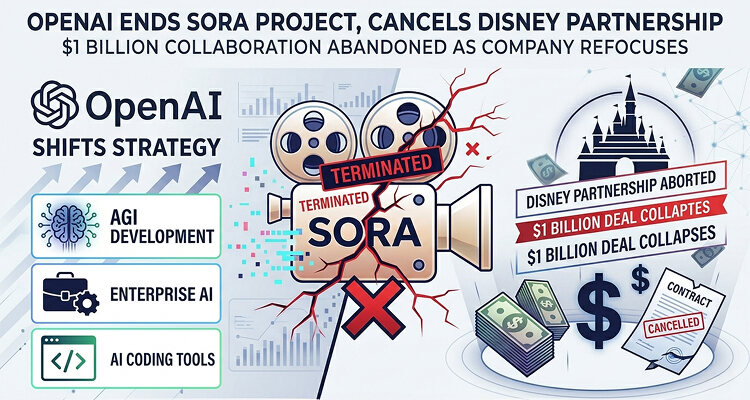
The sudden OpenAI Sora shutdown has sent shockwaves across the technology and media industries, particularly impacting Walt Disney, which was reportedly in discussions for a major partnership involving the AI video tool.
According to sources familiar with the situation, teams from Disney and OpenAI were actively collaborating on Sora-related initiatives shortly before the company abruptly decided to discontinue the project.
The announcement came with little warning, leaving stakeholders surprised by the rapid shift in strategy.
Get a FREE interview of top 3 candidates.
Developers, QA, DevOps, Designers, PMs & more.
Pre-vetted remote talent. Fast onboarding. Flexible scaling.
At Quaid Technologies, we help businesses stay ahead with the latest AI innovations.
$1 Billion Deal Collapses Before Completion
The OpenAI Sora shutdown effectively ends what could have been a $1 billion partnership between OpenAI and Disney.
The proposed deal included:
- A multi-year collaboration agreement
- Potential investment from Disney
- Access to a large portfolio of entertainment characters for AI-generated video content
However, sources indicate that the agreement had not yet been finalized, and no financial transactions had taken place before the cancellation.
Why OpenAI Is Shifting Focus
The decision to move away from Sora reflects a broader strategic shift at OpenAI.
The company is now prioritizing:
- AI coding tools
- Enterprise solutions
- Development of Artificial General Intelligence (AGI)
CEO Sam Altman and leadership teams are focusing on building a unified AI platform, often described as a “super-app,” that integrates multiple capabilities into a single ecosystem.
This shift highlights the growing importance of enterprise AI applications over experimental consumer tools.
High Costs and Resource Constraints
One of the major reasons behind the OpenAI Sora shutdown appears to be the significant computational resources required to operate advanced AI video generation systems.
Running such tools at scale demands:
- High-performance computing infrastructure
- Large amounts of processing power
- Continuous optimization
These requirements may have limited OpenAI’s ability to allocate resources efficiently across other high-priority projects.
Competition Intensifies in the AI Market
The shutdown also comes at a time of increasing competition in the AI industry.
Companies like Anthropic are gaining traction with coding-focused AI products, while major tech firms continue to invest heavily in enterprise AI solutions.
The competitive landscape is pushing companies like OpenAI to refine their strategies and focus on areas with the highest growth potential.
What This Means for the Future of AI Video
When Sora was first introduced, it captured global attention for its ability to generate high-quality videos from simple text prompts. The technology demonstrated the potential of AI in content creation, media production, and digital storytelling.
However, the OpenAI Sora shutdown suggests that AI video generation may still face challenges in scalability, cost, and commercialization.
Despite this setback, industry experts believe that AI-generated video will continue to evolve as technology improves.
Impact on Businesses and Technology Strategy
The sudden change in OpenAI’s direction highlights how quickly the AI landscape can shift.
At Quaid Technologies, we closely monitor these developments to help businesses adapt to emerging trends in artificial intelligence. Strategic decisions like this emphasize the importance of focusing on scalable, high-impact AI solutions.
Organizations that stay flexible and align with evolving AI priorities will be better positioned to succeed in a competitive market.
Conclusion
The OpenAI Sora shutdown marks a significant turning point in the company’s strategy, signaling a move away from AI video generation toward enterprise and coding-focused solutions.
While the decision disrupts potential partnerships and raises questions about the future of AI video tools, it also highlights the rapid evolution of the AI industry.
As companies continue to refine their focus, the next phase of AI innovation will likely center on scalability, efficiency, and real-world applications.
Related Tech Stories