
Google Ads for Service-Based Businesses: Lead Quality Tactics
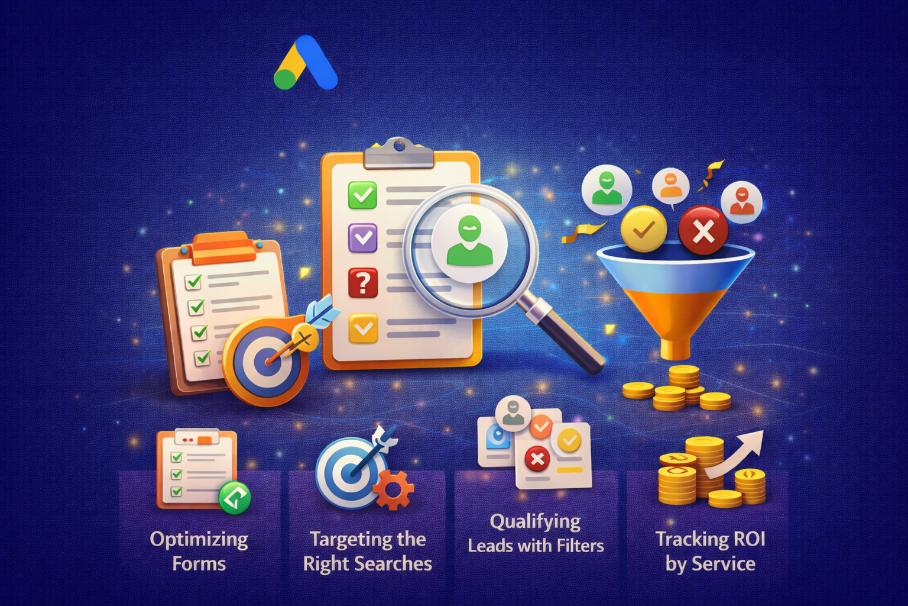
For service-based businesses, Google Ads can be a powerful lead generation channel, but not all leads are created equal. Many companies generate high volumes of inquiries only to discover that most leads are unqualified, price-sensitive, or outside their service scope. It leads to wasted ad spend, frustrated sales teams, and poor return on investment.
Success with Google Ads for service-based businesses depends on attracting the right prospects, not just more clicks. Improving lead quality requires a strategic approach that aligns targeting, messaging, and conversion paths with genuine buyer intent. When done correctly, Google Ads becomes a predictable and profitable growth engine for service providers.
Why Lead Quality Matters More Than Lead Volume
High lead volume can be misleading if those leads do not convert into paying clients. Service-based businesses often operate on thin margins, where time spent on unqualified inquiries directly impacts profitability.
Low-quality leads increase sales cycle length, reduce close rates, and drain internal resources. By focusing on lead quality, businesses improve efficiency, increase conversion rates, and generate higher lifetime customer value. Google Ads performs best when campaigns are designed to attract users actively searching for specific services.
Target High-Intent Keywords Only
Focusing on high-intent keywords ensures your ads reach users who are ready to hire a service, not just researching.
- Use service-specific keywords (e.g., “emergency plumber near me,” “commercial cleaning service Chicago”)
- Prioritize transactional phrases like hire, book, get a quote, and service provider.
- Avoid overly broad keywords that attract low-quality traffic.
- Segment keywords by service type and location for better control
Structure Campaigns Around Specific Services
Campaign structure directly affects lead quality. When multiple services are grouped into a single campaign or ad group, ads become generic and attract mixed intent traffic.
Service-based businesses should create separate campaigns or ad groups for each core service. It allows ad messaging, keywords, and landing pages to align closely with user intent. Clear structure improves Quality Score and ensures users see ads that match exactly what they are searching for.
Specificity leads to stronger intent and higher-quality leads.
Write Ads That Pre-Qualify Leads
Ad copy should do more than generate clicks; it should filter out poor-fit prospects. Clear messaging helps set expectations before users even reach the landing page.
Including service scope, target audience, pricing indicators, or service limitations discourages irrelevant clicks. Ads that clearly communicate value attract users who are genuinely interested and ready to convert. Pre-qualifying through ad copy reduces wasted spend and improves conversion efficiency.
Effective ads attract fewer but better leads.
Use Location and Audience Targeting Strategically
Location targeting plays a critical role for service-based businesses, especially those operating within specific regions. Ads should only appear in areas where services are available.
Audience targeting can further refine lead quality by focusing on users with relevant behaviors or interests. Remarketing lists help re-engage users who have already shown interest, while in-market audiences can support intent-based targeting.
Combining location and audience targeting improves relevance and reduces low-quality inquiries.
Optimize Landing Pages for Lead Quality
Landing pages are where lead quality is ultimately determined. Pages that focus solely on capturing contact information often attract unqualified users.
High-quality landing pages clearly explain the service, outline who it is for, and set expectations. Including qualification elements such as service descriptions, FAQs, or pricing ranges helps users self-select before submitting a form.
A well-optimized landing page improves both lead quality and conversion rates.
Use Conversion Tracking That Reflects Real Value
Tracking every form submission as a conversion can inflate performance metrics while hiding lead quality issues. Service businesses should track meaningful actions that reflect real business outcomes.
It may include qualified form submissions, phone calls over a certain duration, or booked consultations. Accurate conversion tracking allows Google Ads to optimize for leads that are more likely to convert into clients.
Better tracking leads to better optimization decisions.
Apply Negative Keywords Aggressively
Negative keywords are essential for protecting lead quality. Without them, ads may appear for irrelevant or low-intent searches.
Regularly reviewing search term reports helps identify queries that generate poor leads. Adding these terms as negatives prevents ads from showing to users who are not a good fit. Over time, this significantly improves traffic quality and reduces wasted spend.
Negative keywords are one of the most powerful lead quality tools.
Control Lead Volume With Smart Bidding
Smart bidding strategies can help balance lead volume and quality when configured correctly. Strategies such as Target CPA work best when conversion data accurately reflects qualified leads.
Setting realistic targets ensures Google optimizes for users likely to convert rather than chasing volume. Smart bidding should be monitored closely, especially during early learning phases, to avoid attracting low-quality traffic.
Automation works best when guided by accurate data.
Filter Leads Through Forms and Calls
Lead forms and call flows can be designed to pre-qualify prospects before they reach your sales team. Asking relevant questions in forms helps filter out poor-fit leads.
For call-based campaigns, call duration tracking helps distinguish between serious inquiries and accidental or low-intent calls. These filters improve lead quality while reducing time spent on unqualified prospects.
Qualification at the conversion stage saves time and money.
Measure Lead Quality, Not Just Cost Per Lead
Cost per lead alone does not reflect campaign success for service-based businesses. A low CPL is meaningless if leads do not convert into clients.
Conversion-to-sale rates, deal value, and lifetime customer value should measure lead quality. Integrating CRM data with Google Ads provides deeper insights into which campaigns generate real revenue.
Focusing on quality metrics leads to smarter optimization.
Common Lead Quality Mistakes to Avoid
Many service businesses unintentionally harm lead quality by chasing volume, using broad keywords, and ignoring negative keywords. Others fail to align ads with landing pages or track meaningful conversions.
Avoiding these mistakes requires a disciplined approach to targeting, messaging, and data analysis. Regular audits help identify and correct issues before they escalate.
How Lead Quality Tactics Support Long-Term Growth
High-quality leads drive sustainable growth for service-based businesses. Better leads convert faster, close at higher rates, and remain clients longer.
Google Ads campaigns built around lead quality produce more predictable results and higher ROI over time. Businesses that prioritize quality over volume gain a competitive advantage in crowded markets.
Conclusion
Google Ads can be highly effective for service-based businesses when lead quality is prioritized. By focusing on intent-driven keywords, precise targeting, clear messaging, and accurate tracking, companies can attract leads that convert into real clients.
Lead quality tactics reduce wasted spend, improve sales efficiency, and support long-term profitability. For service providers, success in Google Ads is not about generating more leads—it is about developing the right ones.
FAQS
How can service-based businesses improve lead quality in Google Ads?
Service-based businesses can improve lead quality by targeting high-intent keywords, using precise location targeting, writing pre-qualifying ad copy, and optimizing landing pages to define services and ideal customers clearly. Regular use of negative keywords and accurate conversion tracking also plays a crucial role.
Why am I getting low-quality leads from Google Ads?
Low-quality leads usually result from broad keyword targeting, unclear ad messaging, poor landing page alignment, or tracking all inquiries as conversions. Without proper filtering, Google Ads may optimize for volume rather than lead relevance.
Which Google Ads campaign type works best for service-based businesses?
Search campaigns typically work best for service-based businesses because they target users actively searching for specific services. When structured properly, Search campaigns deliver higher-intent leads compared to Display or broad automated campaign types.
How do negative keywords help improve lead quality?
Negative keywords prevent ads from showing for irrelevant or low-intent searches. By excluding terms related to free services, jobs, DIY solutions, or unrelated industries, businesses can significantly reduce wasted spend and improve lead relevance.
How should service businesses measure lead quality from Google Ads?
Lead quality should be measured using metrics beyond cost per lead, such as lead-to-sale conversion rate, call duration, booked appointments, and customer lifetime value. Integrating Google Ads with a CRM provides deeper insight into which campaigns generate real revenue.