macOS Tahoe 26.5.1 Released: Navigating Stability and Enterprise Security
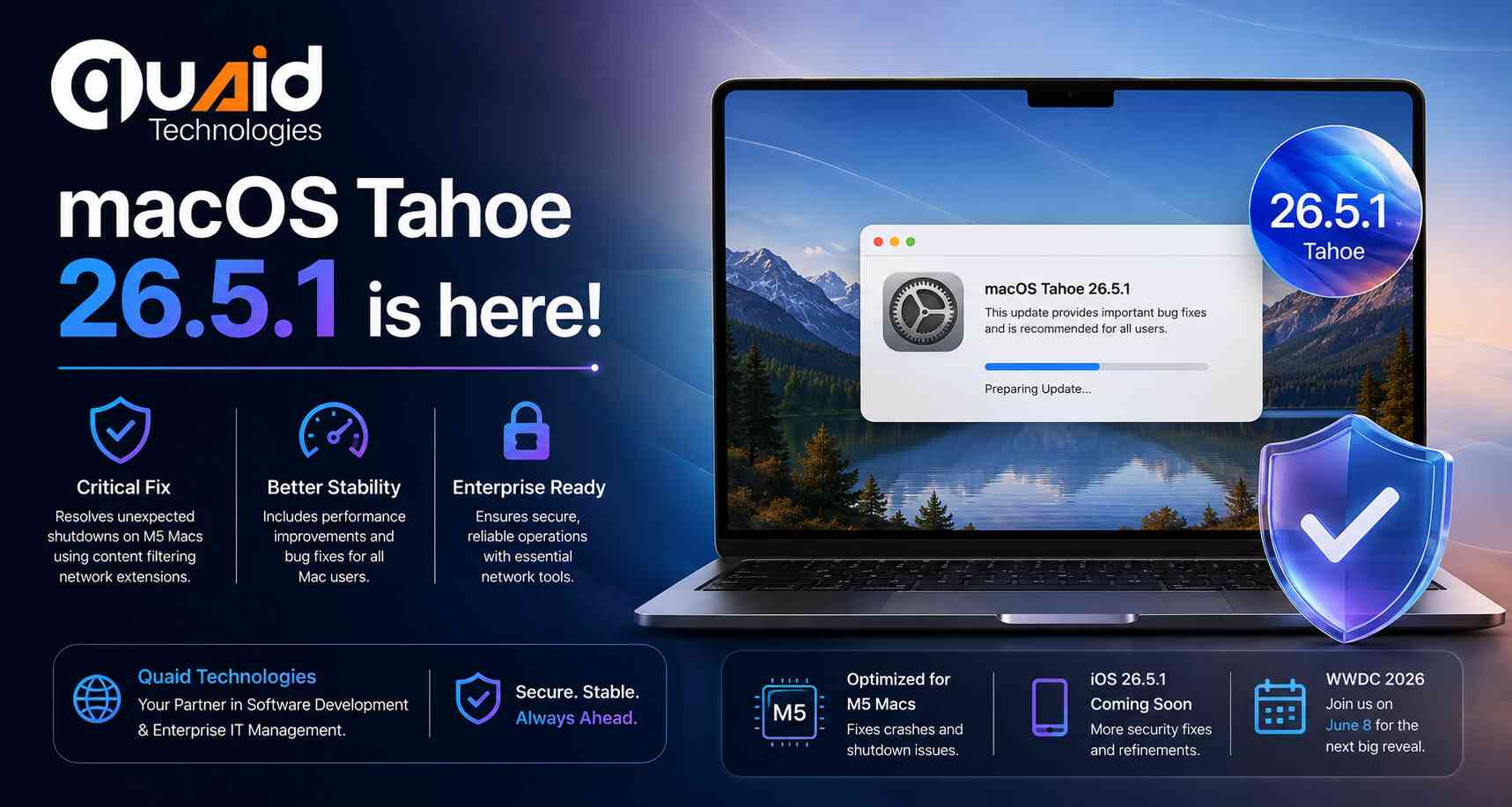
Apple has officially released macOS Tahoe 26.5.1, a targeted maintenance update following the release of version 26.5 three weeks ago. Mac users can download the update by navigating to System Settings > Software Updates. While major version transitions are on the horizon, this patch serves as a critical stabilization release for the current operating system.
At Quaid Technologies, we specialize in Software Development and enterprise infrastructure management, helping businesses navigate critical system patches and maintain operational continuity. Our role is to provide the technical oversight and deployment strategies necessary to manage these updates across large-scale fleets. We help our clients mitigate risks associated with hardware-software conflicts, ensuring that essential tools—such as content filtering extensions—remain fully functional while keeping systems secure and compliant with the latest Apple standards.
Critical Fixes for Enterprise Users
The primary focus of macOS Tahoe 26.5.1 is an unexpected shutdown issue specifically affecting M5-powered Macs. According to the release notes, certain enterprise configurations were experiencing system crashes when utilizing specific content filtering network extensions. By addressing this vulnerability, Apple ensures that corporate security and filtering tools can run reliably without impacting user productivity.
Get a FREE interview of top 3 candidates.
Developers, QA, DevOps, Designers, PMs & more.
Pre-vetted remote talent. Fast onboarding. Flexible scaling.
Building on Previous Stability Improvements
This update follows a trend of focused enterprise refinements. The preceding macOS 26.5 release introduced several critical bug fixes, including resolutions for startup issues where devices would load to a black screen and intermittent errors related to mounting SMB shares on MacBook Air and MacBook Pro models. While this current patch lists a specific fix, it is widely recommended that all users apply the update to benefit from underlying performance enhancements and stability optimizations.
Upcoming iOS 26.5.1 and Future Roadmap
The update cycle continues beyond the desktop, with reports indicating that an iOS 26.5.1 release is imminent. Following the rollout of iOS 26.5—which included RCS support and significant security patches—this upcoming version is expected to focus on further closing security vulnerabilities and resolving reported interface stutters.
These releases serve as the final foundational steps before Apple turns its full attention toward the next generation of software. The industry is currently anticipating the WWDC 2026 keynote on Monday, June 8, where Apple is expected to unveil major updates, including macOS 27 and the next iterations of its mobile operating systems.
FAQs About macOS Tahoe 26.5.1
What is the primary fix in the macOS Tahoe 26.5.1 update?
This update specifically addresses an issue where Macs equipped with an M5 chip could experience unexpected shutdowns when running certain content filtering network extensions.
Who should install this update?
While the release notes focus on enterprise users and M5 hardware, it is recommended that all Mac users install the update. Apple frequently includes general performance enhancements and hidden bug fixes in these point releases that improve overall system stability.
How can I update my Mac?
You can update your device by opening the System Settings app on your Mac and navigating to the Software Updates section.
When is the next major macOS update expected?
Apple is set to unveil the next major version, macOS 27, during the Worldwide Developers Conference (WWDC) keynote, which takes place on Monday, June 8, 2026.
How does Quaid Technologies assist with enterprise updates like this?
Quaid Technologies provides strategic technical oversight and deployment management to ensure that critical patches are integrated seamlessly across your enterprise infrastructure. We help organizations maintain operational continuity by mitigating risks associated with hardware-software conflicts, ensuring your critical network extensions and tools remain secure and fully functional.
Related Tech Stories