
How Digital Marketing Services Help You Compete Online
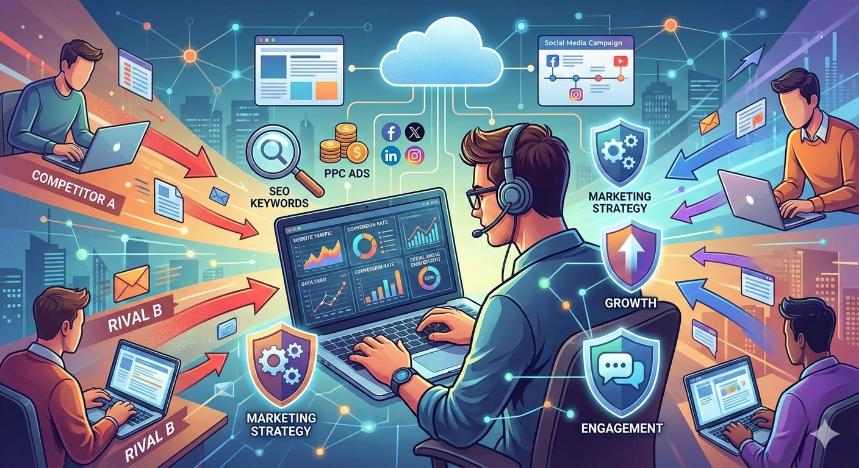
In today’s digital age, the competition among businesses has shifted from traditional methods to online platforms. Whether you’re a small local business or a large enterprise, staying competitive online is crucial for long-term growth. With millions of companies vying for attention on the internet, it’s important to leverage digital marketing service to stand out, reach your audience, and drive revenue. This blog will explore how digital marketing services can give businesses the edge they need to compete online and stay ahead of their competitors.
1. Understanding the Digital Marketplace
The digital marketplace has revolutionized how businesses operate and compete. Unlike traditional retail, where competition is local or regional, online companies are competing globally. The online landscape is vast, with millions of companies offering similar products or services. Therefore, the digital marketplace is highly competitive, requiring businesses to adopt effective digital marketing strategies to capture consumer attention and drive engagement.
What makes the digital marketplace different from traditional competition is that businesses can interact with potential customers at any time and from anywhere. Consumers can search for products, compare prices, read reviews, and make purchasing decisions all online. As a result, businesses need to be visible and appealing in this crowded space to stay relevant and win customers. It is where full service digital marketing company can provide an integrated strategy and tools to help businesses thrive in such a competitive environment.
2. The Role of SEO in Gaining Competitive Advantage
Search Engine Optimization (SEO) is one of the most powerful tools in the digital marketing arsenal. SEO is the practice of optimizing your website and content to rank higher in search engine results, particularly Google, which dominates the search engine market. The higher your website ranks for relevant keywords, the more likely potential customers will find you over your competitors.
For example, if a consumer searches for “best running shoes,” businesses that rank on the first page of Google are more likely to receive clicks and conversions. SEO involves several elements, such as keyword research, on-page optimization, link-building, and content creation. When executed properly, SEO can drive significant traffic to your site, giving you an edge over competitors that are less optimized.
By consistently improving your website’s SEO, you increase your chances of appearing at the top of search results, thereby increasing your visibility and attracting more organic traffic. Unlike paid ads, which require ongoing investment, SEO efforts compound over time, ensuring that your business remains visible even after the initial work is done.
3. Using Paid Advertising (PPC) to Outshine Competitors
While SEO is a long-term strategy, Pay-Per-Click (PPC) advertising offers immediate results. PPC campaigns, especially Google Ads, allow businesses to target specific keywords and demographics to show their ads to people who are actively searching for products or services like theirs. The beauty of PPC is that businesses only pay when a user clicks on their ad, making it a cost-effective method for generating traffic and leads.
PPC gives businesses the opportunity to outshine competitors by appearing at the top of search engine results pages (SERPs), even above organic listings. This premium placement is highly coveted, and businesses can outbid competitors for these prime spots. Whether it’s Google Ads, Facebook Ads, or LinkedIn Ads, the ability to run highly targeted ad campaigns allows businesses to reach the right audience at the right time. This targeted approach ensures that your advertising dollars are being spent efficiently, leading to higher conversion rates and a more competitive position.
PPC advertising also allows businesses to refine their approach through A/B testing. By experimenting with different ad copies, landing pages, and targeting options, you can determine which strategies work best for your audience and continually optimize for better results.
4. Social Media Marketing for Building Brand Loyalty
Social media marketing is another critical tool for competing online. With billions of users across platforms like Facebook, Instagram, Twitter, and LinkedIn, social media offers businesses the opportunity to reach and engage with their target audience on a personal level. Regularly posting content, engaging with followers, and running targeted ads are some of the ways businesses can use social media to build brand loyalty and stand out in a competitive marketplace.
Social media platforms provide unique opportunities for businesses to humanize their brand, respond to customer feedback, and create a community around their products or services. Engaging with your audience through comments, direct messages, and polls helps foster a deeper connection, which can lead to repeat business and referrals.
Influencer marketing has also become a powerful tool for businesses to reach new customers. By partnering with influencers who have a large following in your industry, you can tap into their established audience and build brand credibility. Influencer collaborations can provide businesses with more visibility and a competitive edge by leveraging the trust that influencers have built with their audience.
5. Content Marketing: Establishing Authority Over Competitors
Content marketing is one of the most effective ways to establish authority in your industry and gain a competitive advantage online. By creating valuable, relevant, and consistent content, you position your brand as a thought leader in your field. Whether it’s through blog posts, videos, eBooks, webinars, or podcasts, content marketing helps businesses provide value to their audience while showcasing their expertise.
When businesses publish informative and engaging content, they not only attract more traffic to their websites but also build trust with potential customers. By answering frequently asked questions, addressing pain points, and offering solutions, businesses can establish themselves as trusted sources of information.
Regularly posting valuable content can also improve SEO by increasing organic search traffic and backlinks. Additionally, content marketing nurtures customer relationships by providing them with useful information long after they make a purchase. The more helpful content you create, the more likely customers are to return and recommend your brand to others.
6. Email Marketing: Staying Top of Mind with Your Audience
Email marketing is one of the most cost-effective and direct ways to communicate with your audience. Unlike social media, where posts can get buried in an algorithm, email marketing allows businesses to reach customers directly in their inboxes. Email campaigns can be personalized and tailored to each recipient based on their preferences and behaviors, ensuring that your message resonates with them.
By building an email list, businesses can continuously engage with their audience, nurture leads, and drive sales. You can send promotional offers, product updates, and personalized recommendations to keep your brand top of mind. Automated email sequences can also be set up to send out welcome emails, reminders, and re-engagement campaigns, saving businesses time while maintaining consistent communication.
Email marketing also provides valuable insights into customer behavior through open rates, click-through rates, and conversion rates, which help businesses refine their approach and stay competitive. Partnering with a full service digital marketing services provider ensures that all email, social, and content campaigns are integrated and optimized for maximum results.
7. Data-Driven Insights for Competitive Intelligence
One of the biggest advantages of digital marketing services is the ability to gather and analyze data. Tools like Google Analytics, SEMrush, and social media insights provide businesses with valuable data that can inform marketing decisions. By tracking metrics like website traffic, user behavior, and conversions, companies can gain a deep understanding of how their digital marketing strategies are performing.
Additionally, digital marketing services offer businesses a way to track competitor performance. Analyzing competitor websites, ad strategies, and social media activity allows firms to benchmark their own performance and identify areas of improvement. This competitive intelligence helps companies to stay agile and make informed decisions to stay ahead in the market.
For example, by monitoring competitors’ keywords, content strategies, and backlink profiles, businesses can uncover new opportunities for optimization and growth. With data-driven insights, companies can continually adjust their strategies to stay one step ahead of the competition.
8. The Advantage of Retargeting and Remarketing
Retargeting and remarketing are powerful techniques that allow businesses to stay visible to potential customers who have previously interacted with their brand. When a user visits your website but doesn’t make a purchase or take the desired action, retargeting ads can follow them across the internet, reminding them of your products or services.
Remarketing helps businesses increase their conversion rates by re-engaging users who have already shown interest. This strategy is highly effective because it targets individuals who are already familiar with your brand, making them more likely to convert. By staying top of mind, businesses can bring back lost leads and ultimately outperform competitors who fail to implement these strategies.
9. Flexibility and Scalability of Digital Marketing
One of the greatest benefits of digital marketing is its flexibility and scalability. As businesses grow, so too can their digital marketing efforts. Digital marketing services allow businesses to scale their campaigns based on their goals and budget. Whether you’re a small startup or a large enterprise, you can tailor your digital marketing strategy to fit your needs.
The flexibility of digital marketing allows businesses to adjust campaigns in real-time, ensuring that they can capitalize on new trends, respond to market changes, and refine their strategies for better performance. Unlike traditional marketing, where changes can take time and incur additional costs, digital marketing allows businesses to make quick adjustments to maximize results.
Additionally, businesses can test various marketing tactics to see what works best for their audience. This ongoing optimization ensures that companies continue to improve their competitive edge.
10. Case Studies of Businesses Winning with Digital Marketing
There are countless examples of businesses that have successfully used digital marketing services to outcompete their rivals. For example, Nike has leveraged social media marketing and influencer partnerships to maintain its position as a leading athletic wear brand. By using targeted ads and collaborating with influencers, Nike has consistently stayed top-of-mind for customers worldwide.
Airbnb is another example of a company that used digital marketing to disrupt the hospitality industry. Through a combination of SEO, content marketing, and social media campaigns, Airbnb built a global presence and became a leader in the travel space.
These case studies demonstrate that with the right digital marketing strategies, businesses can rise above their competition and dominate their industry.
Conclusion
Competing online is a challenge, but digital marketing services provide businesses with the tools and strategies they need to thrive in a crowded marketplace. Whether it’s through SEO, PPC, content marketing, or social media, these services allow businesses to increase their visibility, engage with customers, and drive conversions. By leveraging the power of digital marketing, companies can gain a competitive advantage, scale their efforts, and stay ahead of their competitors.
In an increasingly digital world, adopting digital marketing services is not just a choice; it’s a necessity for businesses that want to succeed online. Stay agile, invest in the right strategies, and continuously optimize your efforts to ensure your brand stands out in the competitive digital marketplace.


