
SEO vs PPC: What’s the Difference?
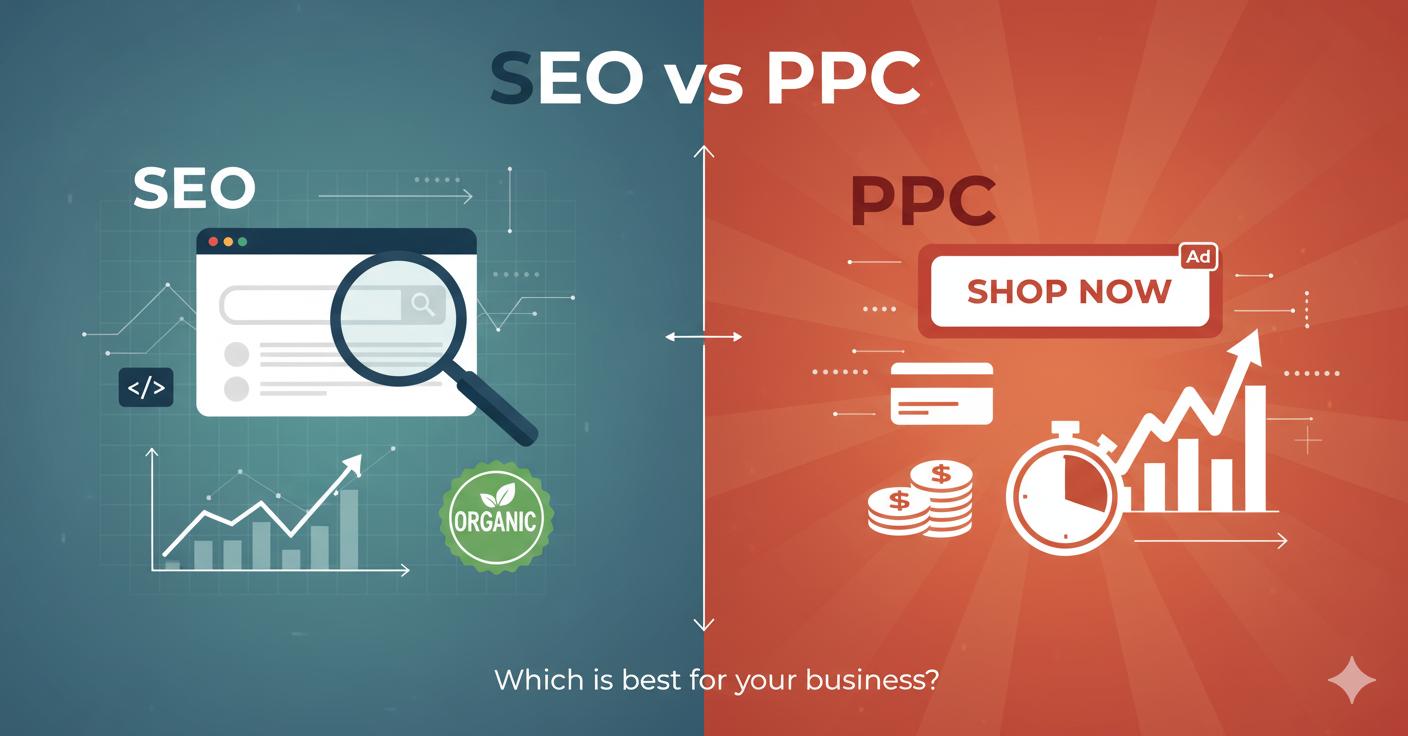
In today’s digital world, businesses of all sizes face the challenge of selecting the most effective online marketing strategies to maximize visibility and drive conversions. Two of the most popular and effective approaches are Search Engine Optimization (SEO) and Pay-Per-Click (PPC) advertising. While both can deliver outstanding results, they work in fundamentally different ways. This blog will explore the key differences between SEO and PPC, helping you understand which strategy is best for your business.
What is SEO?
Search Engine Optimization (SEO) refers to the practice of optimizing your website and content to rank higher in search engine results pages (SERPs) organically. The goal is to enhance the visibility of your website through organic search results without incurring ad costs. SEO involves several critical components, including on-page optimization, off-page optimization, and technical SEO.
Key Components of SEO:
- On-Page SEO: This involves optimizing key elements on your website, including content, title tags, meta descriptions, and headers. High-quality, relevant content that incorporates the right keywords is crucial for achieving a high ranking.
- Off-Page SEO: This focuses on factors that happen off your website, such as backlinks from authoritative sites and social media signals. Building a strong backlink profile is essential for enhancing your site’s authority.
- Technical SEO: The technical aspects of SEO, including improving website speed, ensuring mobile-friendliness, and optimizing the website structure, enable search engines to crawl and index your site effectively.
Benefits of SEO:
- Long-Term Results: Once your website ranks well for targeted keywords, it can continue to drive traffic without continuous investment in ads. Organic rankings tend to be more sustainable over time.
- Cost-Effective: While SEO requires an initial investment in resources, content creation, and technical improvements, it is generally more cost-effective in the long run. You don’t pay for each click.
- Credibility and Trust: Websites that rank organically are often perceived as more credible and trustworthy by users, as they don’t rely on paid placements.
Drawbacks of SEO:
- Time-Consuming: SEO doesn’t deliver immediate results. It may take weeks or months to see the impact of your efforts.
- Continuous Maintenance: SEO requires ongoing adjustments and updates to keep pace with changes in search engine algorithms.
- Competitive: Ranking in competitive industries can be difficult, as it requires high-quality content and a strong backlink profile.
What is PPC?
Pay-Per-Click (PPC) advertising is a paid marketing model where businesses pay each time a user clicks on one of their ads. Platforms like Google Ads and Facebook Ads enable businesses to run targeted campaigns, driving traffic to their websites. PPC is highly customizable, allowing you to set specific goals, such as lead generation, conversions, or brand awareness.
How PPC Works:
PPC campaigns typically involve bidding on keywords relevant to your business. Advertisers place bids on the cost they’re willing to pay for a click on their ad. The higher your bid and the quality of your ad, the better your chances of appearing at the top of search results or other ad spaces.
- Ad Auctions: Google Ads, for example, uses an auction system where advertisers bid on keywords. However, your bid is only one factor. The quality and relevance of your ad (known as Quality Score) also play a significant role in determining the placement of your ad.
- Targeting: PPC allows you to target users based on various factors, including location, device type, demographics, and interests. It makes it an excellent tool for reaching particular audiences.
Benefits of PPC:
- Immediate Results: Unlike SEO, PPC offers instant traffic. As soon as your campaign is live, your ads can appear in front of users, generating immediate visibility.
- Highly Targeted: With PPC, you can precisely target your audience using specific keywords, locations, and demographics, ensuring that your ads are shown to the right people at the right time.
- Scalable: PPC campaigns can be easily scaled up or down. You can start small and gradually increase your budget based on performance.
Drawbacks of PPC:
- Costly: Each click on your ad incurs a cost. In competitive industries, the cost-per-click (CPC) is high, especially for popular keywords.
- Temporary: Once your ad budget is depleted, visibility will disappear. Without ongoing investment, the benefits of PPC are short-lived.
- Requires Expertise: Effective PPC management requires understanding keyword bidding, targeting, ad copy creation, and analytics. Poorly managed campaigns can lead to wasted ad spend.
Key Differences Between SEO and PPC
While both SEO and PPC aim to increase your online visibility, they do so in different ways. Let’s take a closer look at the key differences between these two digital marketing strategies.
Cost Structure:
- SEO: The main cost associated with SEO is the investment in content creation, technical improvements, and link-building strategies. While there’s no direct cost for clicks, you’ll need to allocate resources to maintain and improve your rankings.
- PPC: With PPC, you pay for each click on your ad. The cost-per-click (CPC) can vary depending on the level of competition for your target keywords. You can control your budget by setting daily or campaign-level spending limits.
Time to Results:
- SEO: Results from SEO take time. It may take several months before you begin to see significant changes in your rankings and traffic. However, once you achieve a good ranking, the benefits can last for a long time.
- PPC: PPC delivers instant results. As soon as your campaign goes live, you can start receiving traffic to your website, making it ideal for immediate visibility.
Sustainability:
- SEO: SEO is a long-term strategy. Once you achieve a good ranking, maintaining it requires regular updates and content optimizations. Over time, your SEO efforts can deliver a steady stream of organic traffic.
- PPC: PPC is a short-term strategy. Once you stop paying for ads, the traffic ceases. To maintain visibility, you’ll need to continue funding your ad campaigns.
Traffic Quality:
- SEO: SEO traffic is typically seen as more organic and trustworthy. Users tend to trust organic results over paid ads, which may help with long-term brand loyalty and credibility.
- PPC: PPC traffic is highly targeted and immediate but may be perceived as less organic by users. Paid search ads can be highly effective in driving conversions. Still, they may not have the same level of trust as organic search engine results.
Is SEO or PPC Better for My Business?
Deciding whether SEO or PPC is better for your business depends on several factors, including your business goals, industry, and budget.
- Small Businesses: If you have a limited budget and are seeking sustainable, long-term traffic, SEO may be a better choice. However, if you need immediate visibility and have the budget to support it, PPC can deliver quick results.
- E-commerce and Retail: For e-commerce businesses, PPC can be an excellent way to drive traffic to product pages, especially when targeting high-conversion keywords. However, investing in SEO can help ensure long-term visibility and organic traffic to your store.
- Local Businesses: Local businesses can benefit from both strategies. SEO helps improve local search visibility, while PPC allows you to target users searching for local products or services.
Using SEO and PPC Together: A Combined Strategy
In many cases, combining SEO and PPC strategies can deliver optimal results. By leveraging both approaches, you can ensure your website is visible across multiple channels, increasing your chances of attracting visitors and converting leads.
Why Combine SEO and PPC?
- Boosts Visibility: Using both strategies ensures your website appears in both organic search results and paid ads, maximizing visibility.
- Increased Click-Through Rate (CTR): Studies show that combining organic and paid results can improve your CTR. People are more likely to click when they see your brand in both organic listings and paid ads.
- Better Insights: PPC data can provide valuable insights into which keywords drive traffic and conversions. This data can be used to optimize your SEO strategy, enabling you to target the most relevant terms for organic growth and improve your online presence.
Example of Integrated SEO and PPC Strategy:
- PPC for High-Converting Keywords: Run PPC campaigns for high-conversion keywords or seasonal products to drive immediate traffic and sales.
- SEO for Broader Reach: Use SEO to rank for broader, high-volume search terms that can attract long-term traffic to your site.
- Remarketing Ads: Utilize PPC remarketing ads to target users who have previously visited your site, thereby reinforcing your brand and boosting conversions.
As digital marketing continues to evolve, both SEO and PPC will remain essential for businesses seeking to stay competitive online. In 2025, we anticipate the emergence of AI-powered tools, voice search, and increasingly personalized advertising experiences.
- SEO: As search engine algorithms continue to evolve, SEO will remain focused on delivering valuable, high-quality content and user experiences. Voice search and AI will play a significant role in shaping the future of SEO.
- PPC: With advancements in machine learning, PPC will become more efficient, allowing advertisers to target users better and optimize their ads for conversions.
Conclusion: Choosing the Right Strategy
Both SEO and PPC have their advantages and drawbacks. SEO is a long-term strategy that delivers sustainable, organic traffic, while PPC offers immediate visibility and targeted traffic. The best approach for your business depends on your goals, budget, and timeline. Using both SEO and PPC together can help you maximize your online presence, ensuring you reach the widest audience possible.
FAQ’s:
What is the main difference between SEO and PPC?
The primary difference between SEO (Search Engine Optimization) and PPC (Pay-Per-Click) is that SEO focuses on improving organic search rankings without paying for clicks. In contrast, PPC involves paying for each click on an ad to appear in search results. SEO is a long-term strategy, whereas PPC delivers immediate results but requires ongoing investment.
Which is better for my business: SEO or PPC?
The choice depends on your business goals, budget, and timeline. SEO is better for long-term, sustainable traffic and is more cost-effective over time. PPC is ideal for businesses that need immediate visibility, drive traffic quickly, and target specific audiences. For many companies, a combination of both strategies is the most effective approach.
Can I use SEO and PPC together?
Yes, combining SEO and PPC can be highly effective. PPC provides immediate traffic, while SEO builds long-term organic visibility. By using both, you can maximize your online presence, increase click-through rates, and get insights that help optimize both strategies.
How long does it take to see results from SEO?
SEO typically takes several months to yield significant results. It can vary based on competition, website authority, and the quality of your SEO efforts. While SEO is slower than PPC, the results are long-lasting and more cost-effective in the long run.
Is PPC expensive?
The cost of PPC depends on several factors, including your industry, competition, and the specific keywords you bid on. While PPC can be costly, especially for highly competitive keywords, it allows for precise targeting and immediate traffic. You can control your budget by adjusting bids and setting limits to manage costs.


