
The Importance of Social Media Analytics for Business Growth
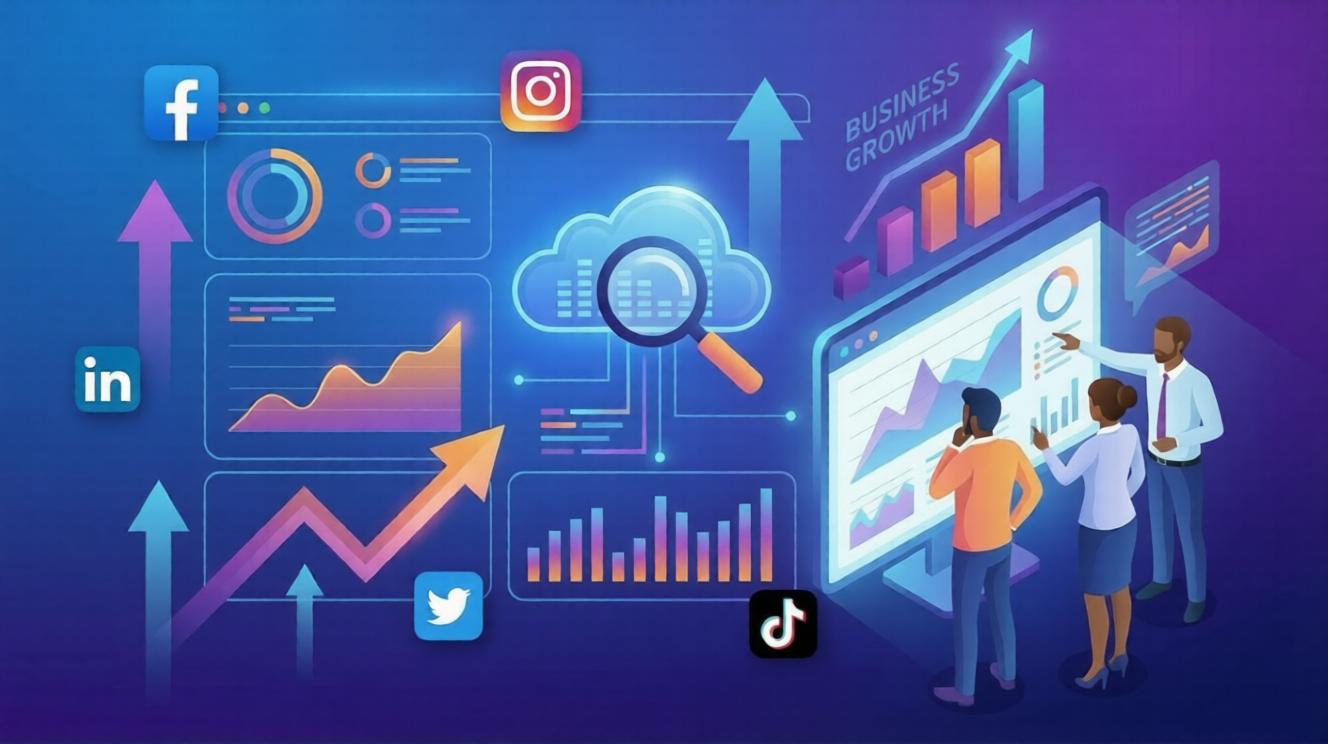
What Are Social Media Analytics?
Understanding Social Media Analytics
Social media analytics tools provide a wealth of data, including audience demographics, content performance, sentiment analysis, and trends. Popular tools like Google Analytics, Facebook Insights, Hootsuite, Sprout Social, and Buffer make it easy for businesses to track these metrics and draw actionable conclusions.
Why Analytics Matter
Analytics provide data-driven insights that enable businesses to track progress toward their goals, identify opportunities for improvement, and measure their return on investment (ROI). Without social media analytics, companies would be making decisions based on guesswork rather than hard evidence.
In a world where digital marketing is increasingly data-centric, businesses need analytics to stay competitive and ensure they’re not wasting valuable resources on ineffective strategies.
Why Social Media Analytics Are Crucial for Business Growth
1. Understanding Audience Behavior
One of the key benefits of social media analytics is the ability to gain a deeper understanding of your audience. Analytics tools provide detailed insights into your audience’s demographics (age, gender, location, interests) and behaviors (how they interact with your content, when they are most active, etc.). This information enables you to tailor your content to suit your audience’s preferences, resulting in higher engagement rates.
For example, if your analytics show that your audience engages more with posts that feature user-generated content (UGC), you can incorporate more of this type of content into your social media strategy. Additionally, understanding when your audience is most active allows you to schedule posts for maximum reach and engagement.
2. Improving Content Strategy
Social media analytics also help you assess the performance of your content. By tracking metrics such as likes, comments, shares, and click-through rates (CTR), you can identify which types of content resonate most with your audience. Do your followers prefer videos, infographics, or blog posts? Do they engage more with educational content or entertaining posts?
This data allows you to create more of what your audience loves, resulting in higher engagement and more meaningful interactions. By understanding the performance of your content, you can refine your content strategy, ensuring that your posts consistently drive results.
3. Measuring ROI
When businesses invest in social media marketing, they want to know whether their efforts are paying off. Social media analytics enable the measurement to return on investment (ROI) by tracking how social media activities translate into sales, leads, and conversions.
For example, through tools like Facebook Ads Manager, businesses can track the effectiveness of paid campaigns by analyzing how much they’ve spent, how many conversions they’ve generated, and how much revenue was driven from those ads. It allows businesses to optimize their ad spend and reallocate resources to campaigns that are performing well.
4. Optimizing Paid Advertising
Paid social media ads are a significant component of many businesses’ digital marketing strategies. Social media platforms, such as Facebook, Instagram, LinkedIn, and TikTok, offer powerful advertising tools that enable companies to reach highly targeted audiences. However, running effective paid campaigns requires constant monitoring and optimization.
With the help of analytics, businesses can track key metrics, including click-through rates, conversion rates, and cost-per-click (CPC). These insights enable companies to refine their targeting, ad creative, and budget allocation to ensure they maximize the return on their advertising investment. For example, suppose a particular ad copy or image is performing better than others. In that case, you can adjust your campaign to highlight those elements.
Key Social Media Metrics to Track for Business Growth
1. Engagement Metrics
Engagement is one of the most critical indicators of how well your content resonates with your audience. Engagement metrics, including likes, comments, shares, and mentions, reflect the level of interaction your audience has with your posts.
- Engagement Rate: This is the percentage of people who engage with your content compared to the total number of people who have seen your post. A higher engagement rate indicates that your audience finds your content valuable and is more likely to take action (e.g., sharing, commenting).
- Shares: When users share your content, it means they find it valuable enough to pass it along to their own followers, extending your reach and increasing brand visibility.
2. Reach and Impressions
- Reach: Reach refers to the total number of unique users who have seen your content. It gives you an idea of how many people your content is reaching, regardless of whether they engaged with it.
- Impressions: Impressions refer to the total number of times your content has been displayed, regardless of whether it was clicked or not. While reach gives you an idea of how many people have seen your content, impressions show how many times it’s been seen overall.
Both reach and impressions are essential for assessing the visibility of your content and understanding how far your messages are spreading.
3. Follower Growth
Tracking follower growth over time helps you gauge how well your social media presence is expanding. Suppose your number of followers is steadily increasing. In that case, it’s a sign that your content is resonating with your audience and that your brand is gaining traction.
Follower growth also provides insights into the effectiveness of your social media campaigns, influencer partnerships, and content strategies. A consistent increase in followers indicates that your brand is building a strong online presence.
4. Conversion Metrics
Conversions refer to the actions users take after interacting with your content, such as purchasing a product, signing up for a newsletter, or downloading an app. Social media analytics tools track these conversions, allowing you to measure the impact of your social media efforts on your bottom line.
By tracking conversions, businesses can understand how well their social media channels are driving customer actions. For example, suppose a Facebook post is driving a significant number of conversions. In that case, you can adjust your content and campaign strategies to replicate that success across other platforms.
How to Use Social Media Analytics to Improve Your Strategy
1. Optimize Content Performance
By analyzing your content performance, you can identify which types of posts generate the most engagement. If videos or infographics are performing better than images or text-based posts, focus on creating more of that content. Use A/B testing to experiment with different post formats, times, and calls-to-action (CTAs) to see what works best.
2. Adjust Targeting and Personalization
Social media analytics provide valuable insights into your audience’s demographics, behaviors, and interests. Use this information to refine your targeting and create personalized campaigns. By understanding the nuances of your audience, you can make more relevant content that speaks directly to their needs and desires.
3. Refine Advertising Campaigns
Running paid advertising campaigns requires constant monitoring and adjustment. Analytics tools allow you to track which ads are performing best, so you can optimize your targeting, creative, and budget allocation for maximum ROI. If certain ads are generating more leads or sales, allocate a larger portion of your budget to those ads to achieve better results.
4. Improve Timing and Scheduling
Social media analytics tools can tell you when your audience is most active on each platform. By posting at the optimal times, you can maximize engagement and ensure that your content reaches your audience when they’re most likely to interact with it. For example, if your analytics show that your audience is most active in the evening, schedule your posts for that time to increase visibility.
Challenges of Social Media Analytics
While social media analytics are compelling, there are challenges that businesses must navigate:
- Data Overload: With numerous metrics available, it can be overwhelming to determine which ones are most important. Focus on the metrics that align with your business goals, such as engagement, conversions, and ROI.
- Platform Variability: Each social media platform has its own unique set of metrics and data formats, making it challenging to compare performance across platforms. Utilize tools that aggregate data from multiple platforms to gain a comprehensive view.
- Privacy Concerns: With data privacy regulations like GDPR, businesses must be careful about how they collect and use customer data. Ensure compliance with privacy laws while using social media analytics.
Best Practices for Implementing Social Media Analytics
- Set Clear KPIs: Define measurable key performance indicators (KPIs) that align with your business objectives. These could include engagement rate, conversion rate, or lead generation.
- Monitor Regularly: Track your social media performance consistently to identify trends and make adjustments as needed.
- Leverage Analytics Tools: Use social media management tools like Sprout Social, Hootsuite, and Google Analytics to gather insights and streamline reporting.
- Test and Iterate: Conduct A/B tests, experiment with different content formats, and continuously optimize your social media strategy based on performance data.
Conclusion
Suppose you need help analyzing your social media data or optimizing your strategy. In that case, our expert team can help you leverage social media analytics to boost your business growth.
FAQ’s:
1. Why are social media analytics essential for business growth?
Social media analytics enable businesses to track key metrics, including engagement, reach, and conversions. These insights enable companies to make data-driven decisions, optimize content strategies, and enhance ROI, ultimately driving business growth.
2. What metrics should businesses focus on in social media analytics?
Businesses should focus on key metrics, including engagement rate, reach, click-through rate (CTR), follower growth, sentiment analysis, and conversions. These metrics help measure content performance, audience interaction, and the effectiveness of campaigns.
3. How can social media analytics improve content strategy?
By analyzing content performance, businesses can identify which types of posts generate the most engagement. It helps in creating more of what the audience prefers, ensuring higher interaction and better alignment with audience interests.
4. How do social media analytics help with paid advertising?
Social media analytics help businesses optimize paid campaigns by providing data on ad performance, targeting, and budget allocation. Companies can track metrics such as click-through rates and conversion rates to refine their ad strategies for better results.
5. What are the challenges of using social media analytics?
Challenges include data overload, platform variability, and concerns about privacy. Businesses must focus on relevant metrics, utilize tools that aggregate data across platforms, and ensure compliance with data privacy regulations, such as the GDPR.


