OpenAI Brings Codex to ChatGPT on iPhone, iPad & Android
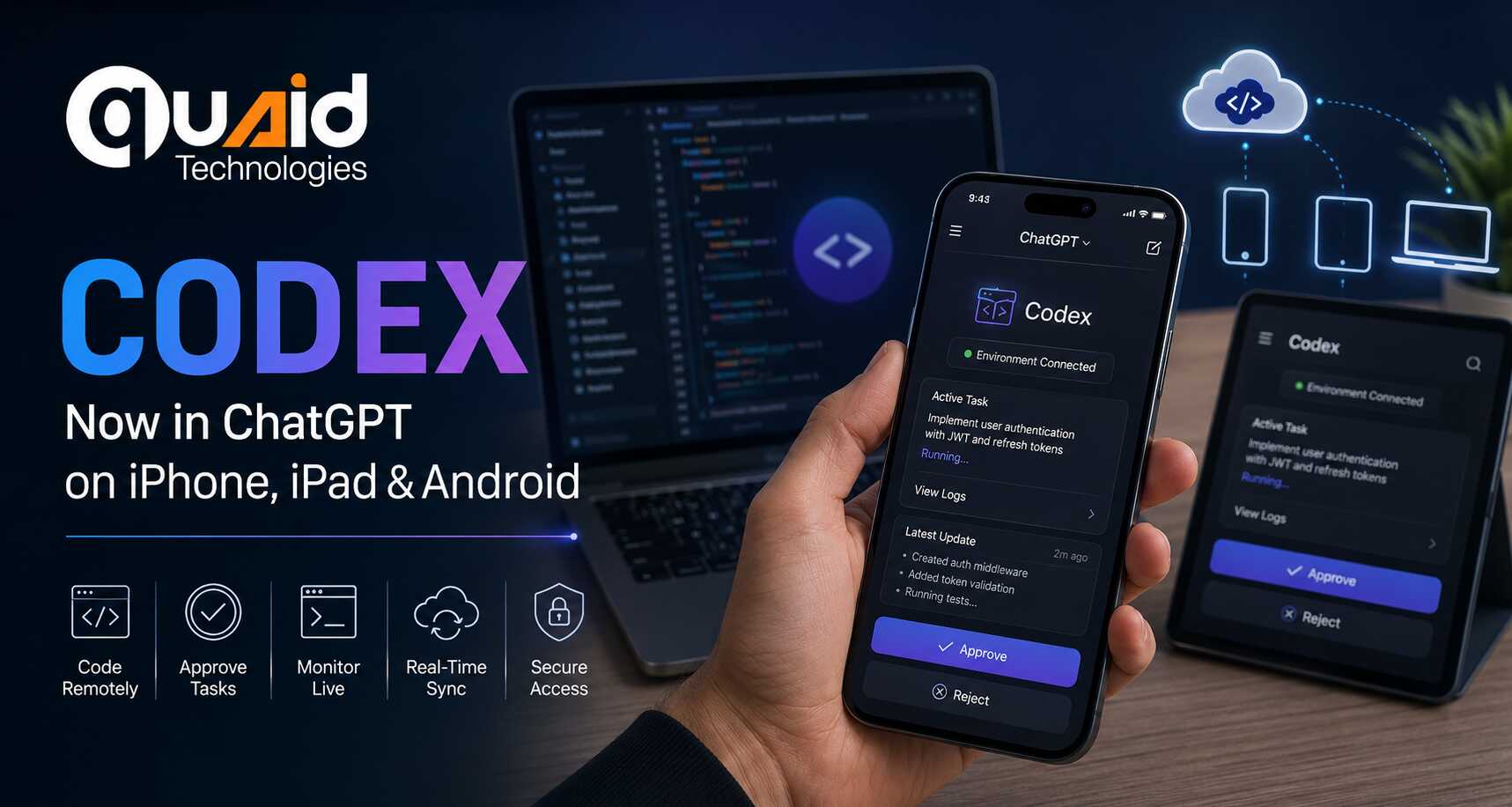
OpenAI has officially expanded access to Codex by integrating the AI-powered coding assistant directly into the ChatGPT mobile app for iPhone, iPad, and Android users.
The latest update allows developers and teams to remotely interact with Codex environments directly from their smartphones, making AI-assisted coding workflows more accessible and flexible than ever before.
At Quaid Technologies, we closely monitor major AI and software development innovations like this to help businesses and developers stay ahead in the rapidly evolving technology landscape through our custom Software Development services.
Get a FREE interview of top 3 candidates.
Developers, QA, DevOps, Designers, PMs & more.
Pre-vetted remote talent. Fast onboarding. Flexible scaling.
Codex Mobile Access Now Available Inside ChatGPT
Previously available as a standalone Mac application, Codex can now be accessed through the ChatGPT mobile app.
According to OpenAI, users can:
- Start new coding tasks remotely
- Approve or reject commands
- Monitor active coding threads
- Review outputs and terminal logs
- Receive real-time updates from connected systems
The feature is designed to help developers continue managing long-running AI coding workflows even when they are away from their desktops or development environments.
How the New Codex Integration Works
The setup process begins on the Codex Mac application. Users are shown a QR code that can be scanned using the ChatGPT app on iPhone, iPad, or Android devices.
Once connected, the mobile app syncs with the live Codex environment running on:
- MacBooks
- Dedicated Mac mini systems
- Remote developer servers
- Cloud-based environments
This allows developers to seamlessly continue projects across multiple devices without interrupting workflows.
Real-Time Coding Collaboration on Mobile
The OpenAI Codex mobile update is more than simple remote control functionality.
Users can now:
- Review AI-generated code changes
- Monitor test results
- Track terminal outputs
- Approve AI-generated actions
- Switch models during workflows
- Access project context and plugins
Importantly, local files, credentials, and permissions remain securely stored on the original machine while only updates and outputs are streamed to the mobile device.
This architecture helps maintain security while improving productivity for software development teams.
OpenAI Expands AI Coding Ecosystem
The Codex mobile rollout comes shortly after several major OpenAI updates, including:
- GPT-5.5 improvements
- Images 2 AI image generation tools
- Enhanced Codex desktop capabilities
- New developer-focused subscription plans
OpenAI also confirmed that support for remotely controlling Codex on Windows devices is currently in development.
The company continues to position Codex as a key component of its growing AI productivity ecosystem for developers and enterprises.
Conclusion
The arrival of Codex inside the ChatGPT mobile app marks another major step in the evolution of AI-assisted development tools.
With remote approvals, real-time coding collaboration, and mobile workflow management now available on iPhone, iPad, and Android, OpenAI is expanding how developers interact with AI-powered programming environments.
As AI coding tools continue to evolve, mobile-first accessibility is expected to play an increasingly important role in modern software development workflows.
Related Tech Stories