Apple Intelligence Expansion: iOS 27 to Feature Generative AI Photo Editing Tools
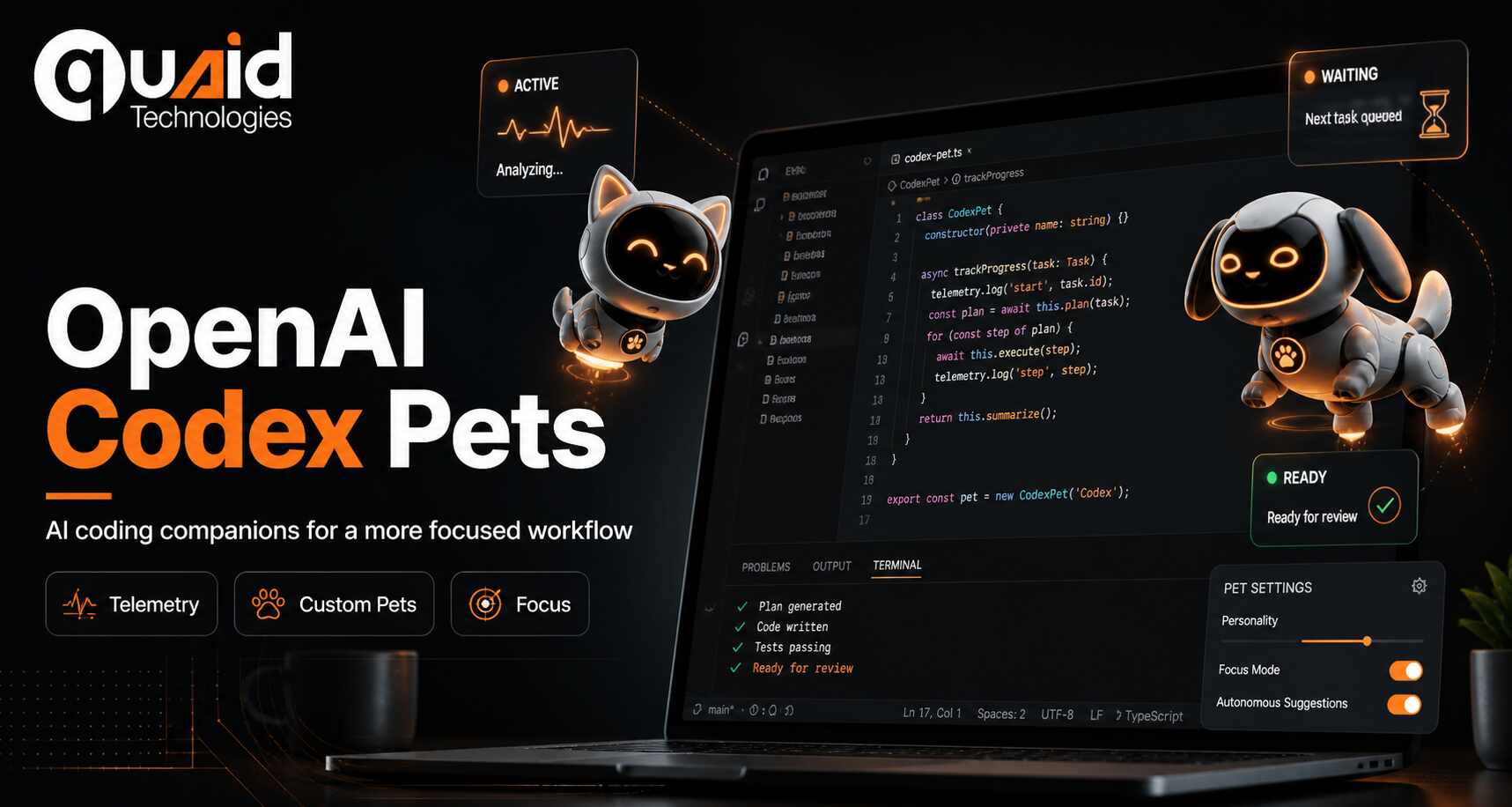
OpenAI has officially transitioned its Codex tool from a standard AI assistant into a more interactive ecosystem with the introduction of OpenAI Codex Pets. These animated, floating companions are designed to alleviate “tab fatigue” by providing a persistent, visual telemetry layer that tracks project status in the background, allowing developers to maintain deep focus on their primary codebase.
At Quaid Technologies, we specialize in integrating these types of high-fidelity AI tools into professional workflows through our expert software development services. Our role in these situations is to act as a bridge between emerging tech and enterprise stability, helping our clients navigate rapid updates while ensuring their digital infrastructure remains secure, optimized, and ready to leverage the latest productivity-enhancing features like AI companions.
Functional Aesthetics: Beyond Just a Visual Overlay
While the visual appeal of a floating cat or dog is immediate, the core value of the OpenAI Codex Pets lies in their real-time status tracking. The companions are programmed to mirror the state of the Codex engine. For instance, the pet’s animation changes based on whether the system is:
Get a FREE interview of top 3 candidates.
Developers, QA, DevOps, Designers, PMs & more.
Pre-vetted remote talent. Fast onboarding. Flexible scaling.
- Active: The pet appears alert or “working” when the AI is currently processing complex logic or generating code blocks.
- Waiting: The pet enters a “resting” or “observing” state when the tool is waiting for user input or further instructions.
- Review Ready: Specific visual cues or animations alert the developer that a thread is ready for review, eliminating the need to manually check status bars.
The Custom Pet Creator: Generative Community Innovation
One of the most significant aspects of this update is the “Custom Pet Creator.” Rather than being limited to the eight standard variations, users can leverage the power of the Codex model itself to design unique companions. By using simple text prompts, developers have already populated the community gallery with icons such as Microsoft’s Clippy, various anime characters, and even caricature versions of tech CEOs. These custom pets can be saved, shared, and toggled instantly, turning the coding environment into a highly personalized digital space.
Technical Command Controls and Performance
OpenAI has prioritized a “lightweight” footprint to ensure that the animated overlays do not consume excessive system resources or cause lag during heavy compilation tasks. The controls are designed to be intuitive and non-intrusive:
- Toggle Command: Typing /pet in the composer instantly brings the pet forward or hides it.
- Keyboard Shortcuts: Cmd+K (Mac) or Ctrl+K (Windows) allows for rapid interaction without taking hands off the keyboard.
- Deep Customization: Located under Settings > Appearance > Pets, the menu allows users to adjust the size, transparency, and specific “wake” behaviors of their companions.
The Industry Shift Toward AI Companionship
The launch of OpenAI Codex Pets marks a broader industry trend toward “Proactive Assistance.” As AI shifts from a tool you “call upon” to a persistent partner that “watches alongside” you, the developer experience is becoming more conversational and less transactional. This update suggests that the future of coding is not just about the code itself, but about the quality of the environment in which that code is created.
FAQs About OpenAI Codex Pets
What exactly do the OpenAI Codex Pets track?
They track real-time project telemetry, including whether the AI is currently running a task, waiting for a prompt, or if a generated block is ready for developer review.
Are Codex Pets available on both Mac and Windows?
Yes. The feature includes universal keyboard shortcuts (Cmd+K for Mac and Ctrl+K for Windows) and is accessible via the Settings menu on both operating systems.
Does having an animated pet slow down my computer?
OpenAI has engineered the pets to be lightweight overlays that minimize GPU and CPU usage, ensuring they don’t interfere with the performance of the coding environment.
Related Tech Stories